Why You Can't Speak English Confidently (And How to Stop Forcing It)
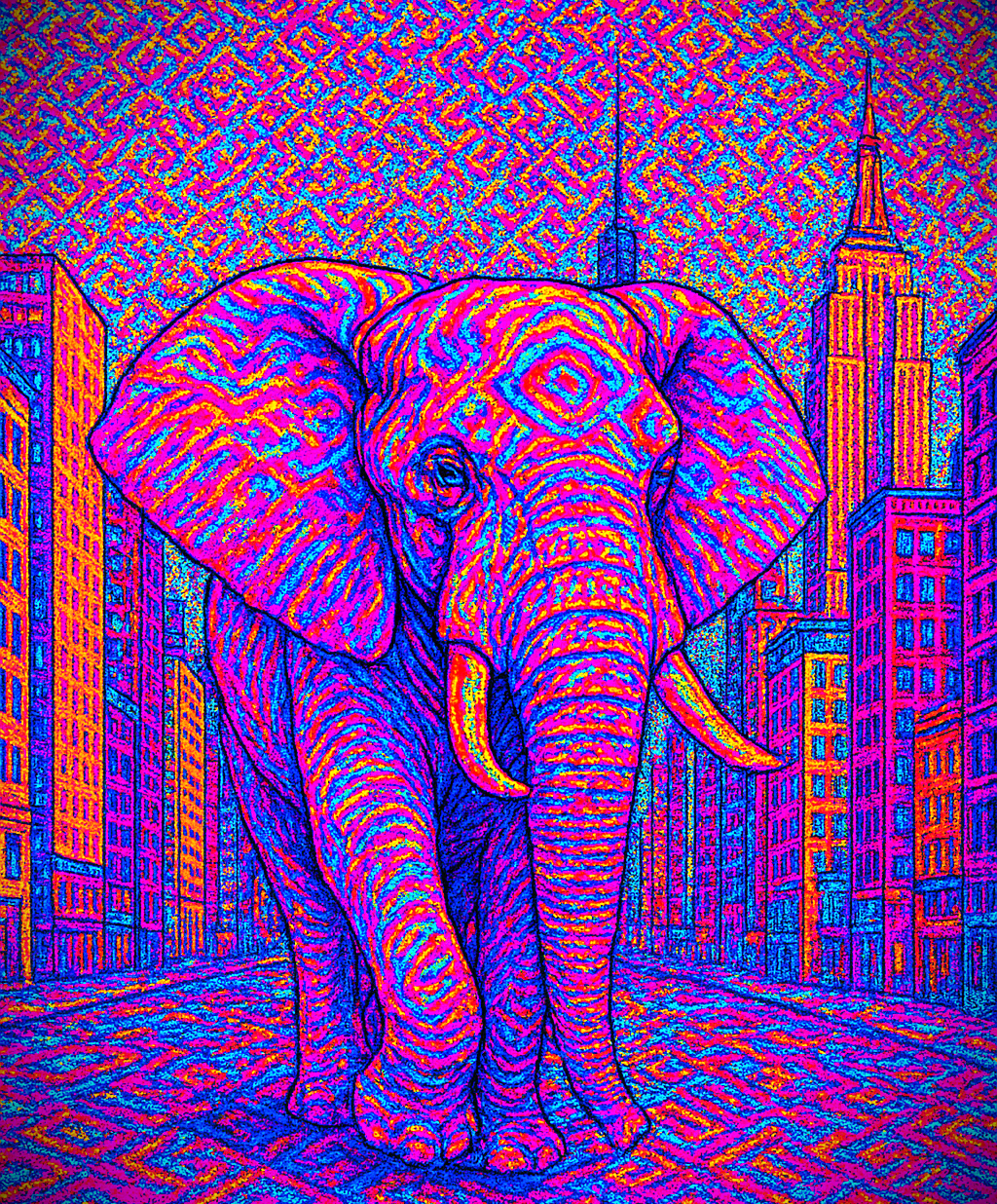
The Elephant On The Poster
I’ve owned a spinning bike since the pandemic. It was something we had to get to keep our sanity during those long and difficult months trapped inside, and I’m glad we own it to be honest because it’s been a godsend with regards to staying in shape. I’m not a fitness fanatic, but it’s nice to burn off some calories from time to time without having to invest in a monthly gym membership.
So the other day I was on the bike, wheels turning, mind wandering, both spinning in circles, going absolutely nowhere but working up a decent sweat nonetheless.
After about ten minutes of leg-burning cardio, an old school dance track came on, the kind that floods your system with those desperately needed feel-good chemicals. I’d been listening to it for a while when this female vocal came in, cutting through the upbeat pounding music that lay underneath.
It was truly captivating.
Her voice was intoxicating, smooth, easy, with this husky, gravelly edge that made it mysterious and wonderful. The lyrics were incredible too, simple yet delivered with such grace and beauty that I found myself completely absorbed by them.
Then something hit me that made me almost fall off the bike. She’d been singing in Spanish.
The whole time.
And I hadn’t noticed.
Not consciously, anyway. My brain had just processed it, understood it, without feeling the need to alert me to the fact that this was my target language, the one I’d fought so hard for the past fifteen years to get my head around.
Having been studying Spanish all this time, these eureka moments (when the language just arrives without you forcing it, when your brain stops trying to decode it and just lets it in) rarely happen. But when they do, I have to say it’s absolute bliss. It’s like the mind is given a magic key and it suddenly unlocks some rusty old padlock that’s been welded shut for years, a padlock you’d given up hope of ever being able to work properly.
There was another time this happened, actually. One moment that sticks in my mind was when I was driving alone, talking to myself about which road to take next, and I said “es por aquí.” It took me a few milliseconds to realise I’d said it in Spanish, which led to a sense of pride so big that I temporarily lost track of where I was going and had to pull over.
On both these occasions, the bike and the car, I was consciously doing something else, my primary focus was elsewhere, the language was just background noise.
Stop Looking and You’ll See It
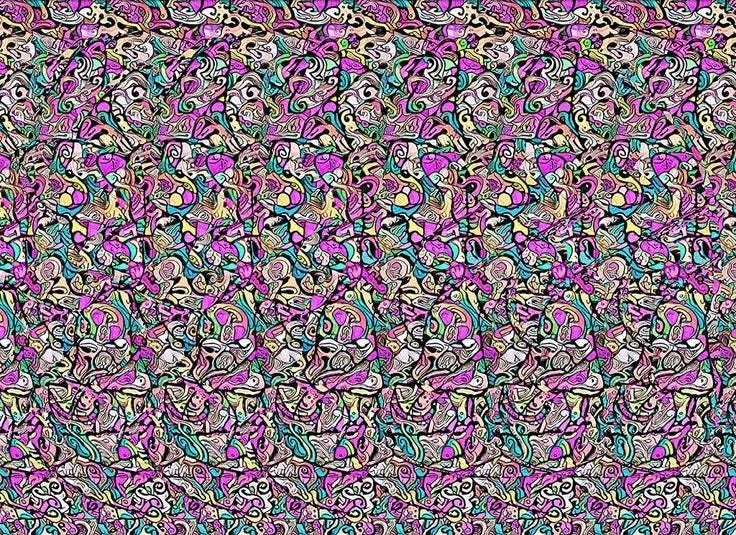
Which reminds me of something my dad showed me years ago that I thought was complete nonsense at the time. It was one of those ‘magic eye’ posters, you know the ones, just a mash of dots and swirls of colour.
But then, when he said there was an image of an elephant walking through New York, I assumed he was winding me up. My brother and I exchanged that look kids give each other when they think their dad’s finally lost the plot.
He insisted there was an elephant in front of the Manhattan skyline and that if I adjusted my focus enough I’d be able to see it. “What do you mean, adjust my focus?” I asked, genuinely confused. He said:
“The more you look for it, the less chance you have of seeing it.”
But then he did something really cool. He put the poster on the opposite side of the window so I had to look through the glass to see it. He told me to look at the glass, not what was behind it. As I stared aimlessly, half seeing my own faint reflection, I was no longer looking at or even noticing the finer detail. My eyes shifted gear completely, as though I was able to look through it now, a bit like daydreaming.
It was at that moment that it happened. From this blurred sea of colour, I started to see lines. Just faint ones at first. Then layers began to appear, as though someone was pushing parts of the poster towards me and pulling others away. I realised my dad had been right all along. I just needed to stop trying to see the image.
So that’s what I did, I...
let go.
I trained my eyes to stay as they were, looking beyond the poster, and from there it all clicked into place.
I’ll never forget the moment I saw the elephant, it came at me like a steam train. I was completely fixated on it at first, those huge ears and incredibly defined tusks and trunk. Then I was able to look around the image, focusing on the different layers and outlines of what started to come to life before me. The rest came crashing into view: the skyscrapers rising behind it, the art deco features of the Chrysler Building, the Manhattan skyline, even the lampposts lining the street. Everything suddenly real, vivid, three-dimensional..
I was literally inside the picture.
The Dots You’re Staring At
Language learning works exactly the same way, except nobody tells you this when you enrol on courses or hire a tutor. They tell you the opposite, in fact. They tell you to focus harder, drill deeper, pay closer attention to every conjugation and preposition and subjunctive clause until your brain feels like it’s going to short-circuit from the sheer weight of all the rules you’re supposed to be following.
The people I work with, senior executives, accomplished professionals, people who’ve built entire careers on their ability to master complex systems, they’re stuck staring at the dots. They know the grammar, they’ve got the vocabulary, they understand the mechanics of how English works, but they can’t see the elephant. They’re so focused on nailing every single element perfectly, on catching every potential mistake before it leaves their mouth, that the whole image stays hidden. They’re looking at the poster, not through it.
What they need to do is exactly what my dad taught me that day: stop trying so hard, shift their gaze, stop obsessing over whether they’ve used the correct preposition or the third conditional and start focusing on something else entirely: getting their message across, being understood, understanding others. The details matter, of course they do, but they’re not the thing you stare at directly. They’re what emerges naturally when you adjust your focus to the bigger picture and just let the language flow.
The Elephant Was Always There
That moment on the spinning bike, when I realised I’d been listening to Spanish without my brain treating it like a foreign language that needed translating, that’s what happens when you finally stop trying to force it. The padlock that’s been rusted shut for years suddenly clicks open the moment you stop standing there rattling it and just let your hand relax.
The language was always there, waiting.
You just needed to get out of your own way long enough to let it in.
This is what I mean when I talk about unconscious competence, about getting to that place where English stops feeling like a performance you have to nail perfectly every single time and starts feeling like something you just do. You don’t get there by drilling down harder on the details. You get there by doing exactly what feels most counterintuitive when you’re stuck: you let go.
You shift your focus from perfection to connection, from accuracy to understanding, from fear of judgement to trust in your ability to make yourself heard. And when you do that, when you finally stop staring directly at the chaos and allow your eyes to adjust, the whole thing comes into focus.
The elephant appears.
And once you’ve seen it, you can’t unsee it.